
The Right Model for Every Workload: Model-Agnostic AI with Our Google Cloud, Microsoft and Anthropic Partnerships
Most of the AI conversations we have with our customers start with the same question: Which model should we use? Giving a single answer to this question is becoming increasingly difficult, because organizations' needs are not one-size-fits-all. One team wants fast access to internal documents, another wants to accelerate software development, and yet another wants to analyze sensitive data without it ever leaving the organization.
That's why we ask the question a little differently: Which job should run on which model, and where? This is exactly what we mean by a model-agnostic approach: enabling an organization to choose the most suitable model and infrastructure for each workload, without tying its AI investment to a single provider. To do this, we bring three pieces together: our Google Cloud, Microsoft and Anthropic partnerships, the GPU infrastructure in our own data center, and our consulting approach that combines them according to each organization's needs.
Why Three Different Partnerships?
At Doğuş Teknoloji, we have long-standing partnerships with Google Cloud and Microsoft. This year, we added Anthropic to our partner ecosystem and became a Certified-level partner in the Claude Partner Network. This level was achieved through our certified teams working with Claude and the projects we have delivered. As a result, we bring organization-specific projects to life for our customers together with our certified teams, whose expertise has been validated by Anthropic.
Each of our partners' models is stronger in a different layer of enterprise AI. Rather than pitching a single product to our customers, we create value by bringing this ecosystem together in the right way for their needs. We also use these models across different workloads in our own operations; we experience the setups we recommend to our customers ourselves first.
Three Ecosystems, Different Strengths
Google Cloud and Gemini
On the Google Cloud side, Gemini is offered both through the Gemini Enterprise app used by employees and through Gemini Enterprise Agent Platform, where developer teams build enterprise agents. What sets the platform apart on the enterprise side is the control structures around the model. Where data is stored and where it is processed can be defined separately, and security layers such as network isolation, encryption key management and detailed audit logs can be enabled.
We especially recommend Gemini for data-intensive scenarios. Chief among these are analytics applications working with enterprise data on BigQuery, search across large document archives, and agents added to applications running on Google Cloud.
Gemini Enterprise also brings together, under one roof, applications such as Gemini Notebook Enterprise, where teams work on their own documents; ready-made agents like Deep Research; and Agent Designer, which enables building agents without writing code.
Microsoft and Microsoft Copilot
Copilot's biggest advantage is that it is built into Outlook, Teams, Word and Excel, the tools employees already use every day. More importantly, the organization's existing access permissions and information security rules apply as they are.
Copilot Studio is used for organizations to build their own agents, while Microsoft Foundry is used for projects that require deeper customization. We see Copilot as an efficient option for accessing internal knowledge, preparing documents, tracking meetings, and self-service processes such as HR or IT support.
Today, Copilot is not tied to a single model either. Alongside OpenAI models, Anthropic's Claude models can also be used in Copilot Chat, in Word, Excel and PowerPoint, and in Copilot Studio. Whichever model is selected, the organization's existing access permissions and security rules continue to apply in the same way.
Anthropic and Claude
Claude can be integrated into an organization's own systems without being tied to a specific office application. Thanks to the Model Context Protocol, it can connect to systems such as CRM, ERP and databases through a single standard, so there is no need to write every integration from scratch.
How Claude is procured also depends on how it will be used. If Claude will be integrated into the organization's own applications via API, it can be purchased through the Google Cloud and Microsoft cloud marketplaces. This way, it can be managed together with the organization's existing cloud investment and billing structure. If features of the Claude app such as Cowork will be used, we recommend obtaining an enterprise license directly from Anthropic.
We position Claude primarily for software development and application modernization, analysis of long and complex documents, and automation of multi-step business processes. With our Certified-level partnership, we provide our customers with stronger integration and consulting support in these areas.
How Do They Work Together?
In practice, most organizations don't move forward with a single model. Employees' day-to-day work can be designed with Copilot inside office applications, data- and analytics-focused applications with Gemini on Google Cloud, and work requiring software development and in-depth analysis with Claude.
In our AI strategy consulting, we work with our customers to identify use cases, assess which use case will deliver better results with which model, and stand alongside their teams throughout the integration process.
When Data Must Not Leave: Local Models on GPU Servers
For some workloads, the cloud option is never on the table. Especially in the finance, healthcare and public sectors, certain data must not leave the organization. In this case, the solution is to run large language models on GPU servers under the organization's control.
The significant progress of open-weight models in recent times has made this possible. Today, for many tasks, a model that runs in-house and never sends data outside can deliver sufficient performance.
The real challenge in this scenario, however, is not software but hardware. GPU procurement, installation, power and cooling are not an easy investment for most organizations to take on. At Doğuş Teknoloji, we made this investment in our own data center. By hosting GPU servers in our own infrastructure, we enable our customers to run local models without purchasing hardware.
This way, sensitive workloads run in this environment while other work can proceed in the cloud with Google Cloud, Microsoft and Anthropic solutions. In our view, a true hybrid architecture means every workload running in the environment best suited to it.
The right choice in AI is not picking the most popular model; it is being able to choose the model and infrastructure that fit the needs of the job. With our Google Cloud, Microsoft and Anthropic partnerships and our own data center infrastructure, we give our customers the flexibility to make that choice. From strategy to use cases, from integration to deployment, we will continue to stand by them at every step.
Tags:
Share:


Popular Posts
What is GPT-4? How to Use GPT-4?
Nowadays, artificial intelligence (AI) is increasingly gaining ground in every aspect of our lives. One of the developments in this field is the development of AI models known as large language models (LLM). We will examine the features, capabilities and potential uses of GPT-4.
December 27, 2023 | 4 min

Business Continuity in Crisis, Best Practices for Disaster Recovery
In an increasingly volatile business landscape, resilience and adaptability have become cornerstones of survival and long-term success. Disruptions can range from natural calamities to cyber threats or even a sudden change in market dynamics. How a business prepares for, reacts to, and recovers from these disruptions defines its resilience. This blog post suggests a comprehensive guide on establishing a robust business continuity plan and best practices for disaster recovery to navigate through crises effectively.
22 September 2023 | 3 min read

Unveiling the Power of Data Estimation in Decision Making
In an era of uncertainty and rapidly changing business landscapes, the value of information has never been more pronounced. The utilization of data estimation stands at the forefront of strategic planning and decision-making, enabling organizations to predict trends, identify potential challenges, and align their actions with concrete evidence. This approach ensures a more calculated, insightful, and responsive way of steering business decisions.
August 24, 2023 | 5 min

Permission Management for Data Compliance - How It Raises Your Business' Data Protection Standards
Permission management for data compliance refers to controlling and regulating data access within an organization by relevant data protection regulations and compliance requirements. It involves implementing policies, procedures, and technology solutions to ensure that data is accessed, used, and shared only by authorized individuals or entities and in a manner that complies with legal and regulatory obligations.
July 21, 2023 | 4 min
How CRM and Marketing Automation Can Be Used Together
In today's fast-paced business world, leveraging technology is no longer an option but a necessity. As businesses struggle to stay ahead of the competition, they often rely on advanced tools and technologies to enhance their marketing strategies and streamline their operations. CRM systems and Marketing Automation tools have emerged as game-changers among these.
June 23, 2023 | 4 min
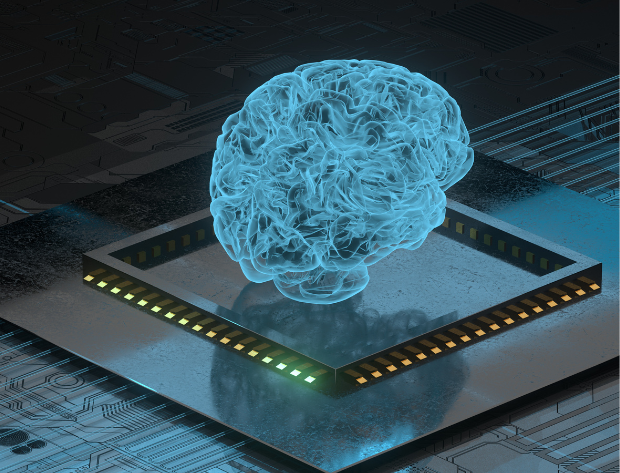
Ultimate Customer Experience with Artificial Intelligent Enhanced Strategies
In today's business environment, customer experience is not just an option but a vital factor for the success of companies. A quality customer experience can strengthen customer loyalty, enhance brand prestige and provide a competitive edge. The emergence of AI-enhanced strategies offers new ways for businesses to improve the customer experience.A quality customer experience can strengthen customer loyalty, enhance brand prestige and provide a competitive edge. The emergence of AI-enhanced strategies offers new ways for businesses to improve the customer experience. By engaging with customers in a more individualized, sensitive, and interactive way, these technologies can help companies deliver a superior customer experience.
June 8, 2023 | 4 min
What Are Software Development Services?
In today's business world, technology is essential for increasing productivity and staying competitive. By utilizing software services, businesses can optimize their processes and become more efficient. Turkey's top technology companies also develop the most appropriate software for their customers by understanding their goals and offering specific solutions.
May 10, 2023 | 5 min

Identity Access Management (IAM)
Identity Access Management (IAM) is a set of technologies, policies, and processes used by an organization to control, manage, and audit users' access to digital resources.
April 28, 2023 | 5 min