

What Is Data Center PUE? How Can Operating Costs Be Reduced Through Energy Efficiency?
Energy efficiency in data center operations is critically important for both sustainability and cost control. In this context, the concept of PUE (Power Usage Effectiveness) is an internationally recognized metric used to measure how efficiently a data center uses energy. Also referred to as a power usage efficiency metric, PUE indicates how effectively a data center infrastructure consumes electricity. In this article, we explain what the PUE value represents, how it is calculated, and how improving energy efficiency in data centers can help reduce operating costs.
What Is PUE and Why Is It Important?
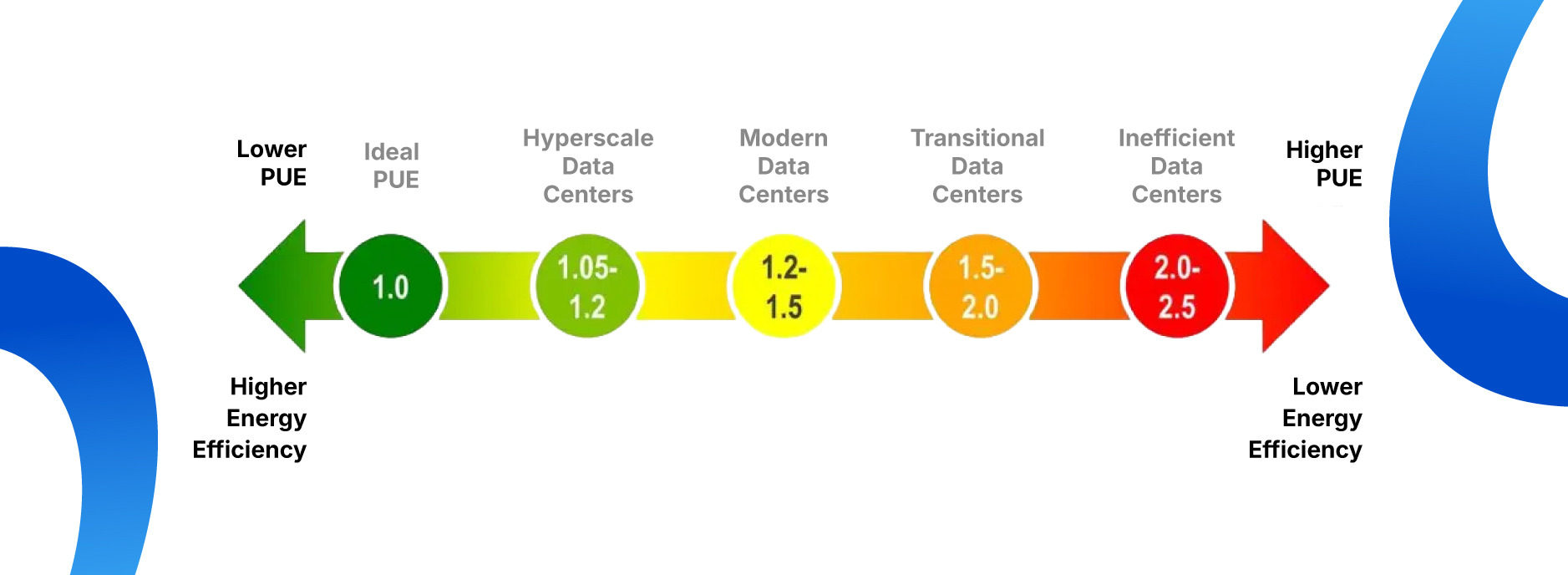
PUE measures how efficiently the total energy consumed in a data center is distributed to IT equipment. Simply put, it compares all the electrical energy used in the data center with the energy directly consumed by computing equipment. The PUE value provides a clear and understandable ratio for evaluating data center energy performance. As the value approaches 1.0, energy usage is considered more efficient. A higher PUE value indicates that a larger share of total energy consumption is used by support systems such as cooling and infrastructure, which directly increases operating costs.
Energy efficiency is not only a sustainability goal but also a key factor in optimizing operational expenses. In data centers, a significant portion of energy consumption is driven by cooling systems, UPS infrastructure, and lighting. For this reason, PUE measurement not only tracks energy usage but also helps identify opportunities for improvement.
How Is the PUE Value Calculated?
The PUE formula is straightforward:
PUE = Total Data Center Energy Consumption / IT Equipment Energy Consumption
For example, if a data center consumes 1,000,000 kWh of total energy while IT equipment consumes 500,000 kWh, the PUE value is calculated as 2.0. This result indicates that half of the total energy is used directly by IT equipment, while the remaining half is consumed by supporting infrastructure systems.
PUE measurements should be conducted regularly and compared across different periods to perform trend analysis. This enables organizations to track the impact of investments made to improve energy efficiency.
Factors Affecting Energy Efficiency in Data Centers
There are many factors that directly influence PUE in a data center, with cooling system efficiency being one of the most significant. Cooling mechanisms designed to reduce heat load account for a large share of total energy consumption. Data centers aiming to improve energy efficiency adopt more effective cooling techniques and optimized airflow management.
Another critical factor is the power distribution system. Devices that minimize energy loss and high-efficiency UPS systems have a positive impact on the overall PUE value. Similarly, lighting controls and sensor-based energy usage help prevent unnecessary consumption.
Reducing Operating Costs Through PUE Optimization
Improvements focused on power usage efficiency in data centers directly translate into lower operating costs. Energy expenses represent a substantial portion of total operational expenditures. Investments made to reduce the PUE value help lower electricity bills over the long term and decrease the total cost of ownership (TCO).
One way to enhance energy efficiency is by assessing the existing infrastructure. Energy monitoring systems make it possible to identify areas that require improvement. This process is also critical for planning data center operations and defining sustainability goals.
A strategic approach to increasing energy efficiency in data centers includes both technical improvements and the restructuring of operational processes. In this regard, choosing a comprehensive hosting service and working with providers who invest in sustainable energy practices can improve the overall energy performance of your data center. For such comprehensive data center solutions, you can review Doğuş Teknoloji's data center services page. Data centers with optimized PUE (Product Efficiency Utilization) values provide lower operating costs and a more sustainable infrastructure in the long run.
Sustainability and Energy Efficiency
Energy efficiency is not merely a cost-reduction tool; it is also an integral part of environmental sustainability goals. Lower PUE values reduce carbon emissions and overall energy consumption, thereby minimizing the environmental footprint of data centers. This contributes to organizations’ ability to achieve their ESG (Environmental, Social, and Governance) objectives.
Continuously monitoring, reporting, and improving energy efficiency in data center operations is also essential for preparing technological infrastructure for the future. More efficient energy usage not only reduces today’s costs but also strengthens an organization’s digital transformation journey.
Creating Long-Term Value with Energy-Efficient Data Centers
The answer to the question of what PUE is clearly demonstrates why energy efficiency has become a strategic priority in data centers. Analyses based on the PUE value enable optimization of energy consumption, reduction of operating costs, and the creation of a sustainable infrastructure. Energy-efficient data centers not only lower current expenses but also secure the digital future of organizations. From this perspective, Doğuş Teknoloji plays a significant role in long-term technology strategies by delivering scalable and energy-efficient data center solutions.
Tags:
Share:


Popular Posts

What is GPT-4? How to Use GPT-4?
Nowadays, artificial intelligence (AI) is increasingly gaining ground in every aspect of our lives. One of the developments in this field is the development of AI models known as large language models (LLM). We will examine the features, capabilities and potential uses of GPT-4.
December 27, 2023 | 4 min

Business Continuity in Crisis, Best Practices for Disaster Recovery
In an increasingly volatile business landscape, resilience and adaptability have become cornerstones of survival and long-term success. Disruptions can range from natural calamities to cyber threats or even a sudden change in market dynamics. How a business prepares for, reacts to, and recovers from these disruptions defines its resilience. This blog post suggests a comprehensive guide on establishing a robust business continuity plan and best practices for disaster recovery to navigate through crises effectively.
22 September 2023 | 3 min read

Unveiling the Power of Data Estimation in Decision Making
In an era of uncertainty and rapidly changing business landscapes, the value of information has never been more pronounced. The utilization of data estimation stands at the forefront of strategic planning and decision-making, enabling organizations to predict trends, identify potential challenges, and align their actions with concrete evidence. This approach ensures a more calculated, insightful, and responsive way of steering business decisions.
August 24, 2023 | 5 min
Permission Management for Data Compliance - How It Raises Your Business' Data Protection Standards
Permission management for data compliance refers to controlling and regulating data access within an organization by relevant data protection regulations and compliance requirements. It involves implementing policies, procedures, and technology solutions to ensure that data is accessed, used, and shared only by authorized individuals or entities and in a manner that complies with legal and regulatory obligations.
July 21, 2023 | 4 min
How CRM and Marketing Automation Can Be Used Together
In today's fast-paced business world, leveraging technology is no longer an option but a necessity. As businesses struggle to stay ahead of the competition, they often rely on advanced tools and technologies to enhance their marketing strategies and streamline their operations. CRM systems and Marketing Automation tools have emerged as game-changers among these.
June 23, 2023 | 4 min
Ultimate Customer Experience with Artificial Intelligent Enhanced Strategies
In today's business environment, customer experience is not just an option but a vital factor for the success of companies. A quality customer experience can strengthen customer loyalty, enhance brand prestige and provide a competitive edge. The emergence of AI-enhanced strategies offers new ways for businesses to improve the customer experience.A quality customer experience can strengthen customer loyalty, enhance brand prestige and provide a competitive edge. The emergence of AI-enhanced strategies offers new ways for businesses to improve the customer experience. By engaging with customers in a more individualized, sensitive, and interactive way, these technologies can help companies deliver a superior customer experience.
June 8, 2023 | 4 min

What Are Software Development Services?
In today's business world, technology is essential for increasing productivity and staying competitive. By utilizing software services, businesses can optimize their processes and become more efficient. Turkey's top technology companies also develop the most appropriate software for their customers by understanding their goals and offering specific solutions.
May 10, 2023 | 5 min
Identity Access Management (IAM)
Identity Access Management (IAM) is a set of technologies, policies, and processes used by an organization to control, manage, and audit users' access to digital resources.
April 28, 2023 | 5 min