
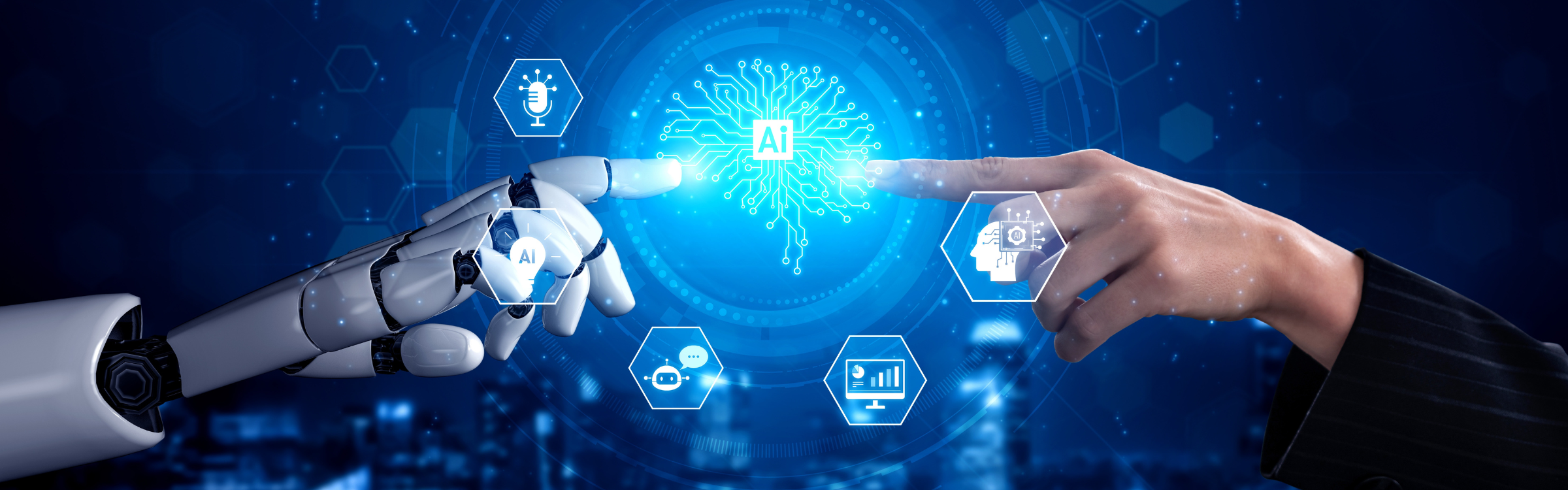
How to Establish a New Division of Work Between Humans and Artificial Intelligence with Agentic AI
Agentic AI is not merely a technology that automates tasks. With its ability to act toward defined objectives, interpret environmental signals, and execute actions across enterprise systems, it assumes an active role within the organization. This structure moves the relationship between humans and artificial intelligence beyond a support-tool model and turns it into a work model that needs to be redefined. For enterprises, the main question is not how powerful Agentic AI is, but how the role distribution between humans and artificial intelligence should be designed.
What Is Agentic AI and How Is It Positioned in Enterprise Structures?
Agentic AI refers to artificial intelligence systems that can autonomously plan, make decisions, and take action to achieve specific goals. These systems do more than generate analysis; they can integrate with enterprise software, data platforms, and operational infrastructures to directly influence business processes. For this reason, Agentic AI is positioned not as a passive support layer, but as an operational actor within the enterprise. At this point, the work model between humans and artificial intelligence becomes a strategic design topic.
Why Is the New Human-AI Work Model Important with Agentic AI?
The new human-AI work model with Agentic AI enables organizations to position artificial intelligence not only as a supportive tool, but as an active structure within operational processes. In this model, Agentic AI takes on routine, data-intensive, and rule-based tasks, while humans retain responsibility for strategy, ethical evaluation, risk management, and final decision-making accountability.
How Should Responsibilities Be Distributed Between Humans and Agentic AI?
When building a new work model with Agentic AI, the first step is to clearly define which decisions can be automated. Routine, data-intensive, and rule-based processes can be delegated to Agentic AI. Real-time analysis on large data sets, triggering operational actions, and coordinating interactions between systems fall within this scope. In contrast, strategic direction setting, ethical evaluation, risk acceptance, and decisions requiring final accountability should remain human-centered.
In this model, humans move away from being manual process operators and take on the role of designing, supervising, and optimizing the system. Agentic AI, on the other hand, assumes the operational workload and delivers speed and consistency. As a result, a more balanced and efficient work model emerges within the organization.
How Does Agentic AI Redesign Decision-Making Processes?
Traditional decision-making mechanisms rely on reports and analytical outputs being evaluated by humans. With Agentic AI, this structure changes. The system analyzes context through continuous data flow, generates decisions within defined boundaries, and initiates actions in relevant systems. The human role shifts toward monitoring the process, defining boundaries, and intervening when necessary.
This approach accelerates decision-making processes, reduces error rates, and improves operational consistency. However, the critical point is that the authority boundaries of Agentic AI must be clearly defined. Structures established without clear authority, access, and action scopes may create the risk of losing control.
How Should Enterprise Security and Governance Mechanisms Be Structured?
Building a healthy work model between Agentic AI and humans requires security and auditability as core principles. Organizations must clearly define which data the systems can access, which decisions they can automate, and which actions they can execute. In addition, all decisions and actions must be traceable.
In this framework, role-based authorization, logging mechanisms, and regular performance analyses should be implemented. Humans remain central in terms of control and responsibility, while Agentic AI operates within predefined boundaries. This model provides both operational speed and enterprise trust.
Organizational Capabilities and Cultural Transformation
The new work model with Agentic AI is not only a technical issue. It also requires redefining organizational capabilities. Software developers, data specialists, and operations teams no longer only use the system; they also define, manage, and optimize agent behaviors. This transformation creates a new responsibility framework and a different set of expertise within the organization.
From a workforce perspective, analytical thinking, system design, and ethical evaluation skills become even more critical. The automation enabled by Agentic AI does not remove humans from the system; instead, it directs them toward higher-value areas.
How Can Sustainable Efficiency Be Achieved with Agentic AI?
A well-designed human-AI work model with Agentic AI creates sustainable efficiency. Operational processes accelerate while decision quality improves. Human talent can focus on more strategic areas. However, this structure requires continuous monitoring and improvement. Agent behaviors, performance metrics, and business outcomes should be analyzed regularly.
At this point, it is critical for Agentic AI to align with the enterprise strategy. Otherwise, a gap may emerge between technology and business objectives. Therefore, Agentic AI is not only a transformation area for technical teams, but also one that should be owned by executive leadership.
The Doğuş Teknoloji Approach to Enterprise Transformation
Establishing a sustainable work model between humans and Agentic AI requires addressing software architecture, data governance, security policies, and operational processes together. Doğuş Teknoloji focuses on designing this transformation holistically with an approach that positions artificial intelligence solutions as an integrated and secure operational layer within enterprise systems. This approach, which evaluates technology, processes, and the human factor within the same framework, enables Agentic AI to be positioned within the enterprise as a controlled, scalable, and strategic structure.
Frequently Asked Questions
What is Agentic AI?
Agentic AI refers to artificial intelligence systems that can autonomously plan, make decisions, and take action to achieve defined goals.
What does Agentic AI do in enterprises?
Agentic AI can be used for data analysis, triggering operational actions, coordinating systems, and automating routine processes.
Does Agentic AI replace humans?
Agentic AI does not completely replace humans. Humans maintain a central role in strategy, ethical evaluation, risk management, and final accountability.
What should enterprises consider when using Agentic AI?
Authority boundaries, data access, security policies, auditability, and human oversight should be clearly defined.
Tags:
Share:


Popular Posts
What is GPT-4? How to Use GPT-4?
Nowadays, artificial intelligence (AI) is increasingly gaining ground in every aspect of our lives. One of the developments in this field is the development of AI models known as large language models (LLM). We will examine the features, capabilities and potential uses of GPT-4.
December 27, 2023 | 4 min

Business Continuity in Crisis, Best Practices for Disaster Recovery
In an increasingly volatile business landscape, resilience and adaptability have become cornerstones of survival and long-term success. Disruptions can range from natural calamities to cyber threats or even a sudden change in market dynamics. How a business prepares for, reacts to, and recovers from these disruptions defines its resilience. This blog post suggests a comprehensive guide on establishing a robust business continuity plan and best practices for disaster recovery to navigate through crises effectively.
22 September 2023 | 3 min read

Unveiling the Power of Data Estimation in Decision Making
In an era of uncertainty and rapidly changing business landscapes, the value of information has never been more pronounced. The utilization of data estimation stands at the forefront of strategic planning and decision-making, enabling organizations to predict trends, identify potential challenges, and align their actions with concrete evidence. This approach ensures a more calculated, insightful, and responsive way of steering business decisions.
August 24, 2023 | 5 min

Permission Management for Data Compliance - How It Raises Your Business' Data Protection Standards
Permission management for data compliance refers to controlling and regulating data access within an organization by relevant data protection regulations and compliance requirements. It involves implementing policies, procedures, and technology solutions to ensure that data is accessed, used, and shared only by authorized individuals or entities and in a manner that complies with legal and regulatory obligations.
July 21, 2023 | 4 min
How CRM and Marketing Automation Can Be Used Together
In today's fast-paced business world, leveraging technology is no longer an option but a necessity. As businesses struggle to stay ahead of the competition, they often rely on advanced tools and technologies to enhance their marketing strategies and streamline their operations. CRM systems and Marketing Automation tools have emerged as game-changers among these.
June 23, 2023 | 4 min

Ultimate Customer Experience with Artificial Intelligent Enhanced Strategies
In today's business environment, customer experience is not just an option but a vital factor for the success of companies. A quality customer experience can strengthen customer loyalty, enhance brand prestige and provide a competitive edge. The emergence of AI-enhanced strategies offers new ways for businesses to improve the customer experience.A quality customer experience can strengthen customer loyalty, enhance brand prestige and provide a competitive edge. The emergence of AI-enhanced strategies offers new ways for businesses to improve the customer experience. By engaging with customers in a more individualized, sensitive, and interactive way, these technologies can help companies deliver a superior customer experience.
June 8, 2023 | 4 min

What Are Software Development Services?
In today's business world, technology is essential for increasing productivity and staying competitive. By utilizing software services, businesses can optimize their processes and become more efficient. Turkey's top technology companies also develop the most appropriate software for their customers by understanding their goals and offering specific solutions.
May 10, 2023 | 5 min

Identity Access Management (IAM)
Identity Access Management (IAM) is a set of technologies, policies, and processes used by an organization to control, manage, and audit users' access to digital resources.
April 28, 2023 | 5 min